Report it. Track it. Fix it.
GoReportIt is a no-nonsense ticketing tool. Your people report issues, your team triages and resolves them, and everyone can see where things stand.
๐๏ธ One queue, zero chaos
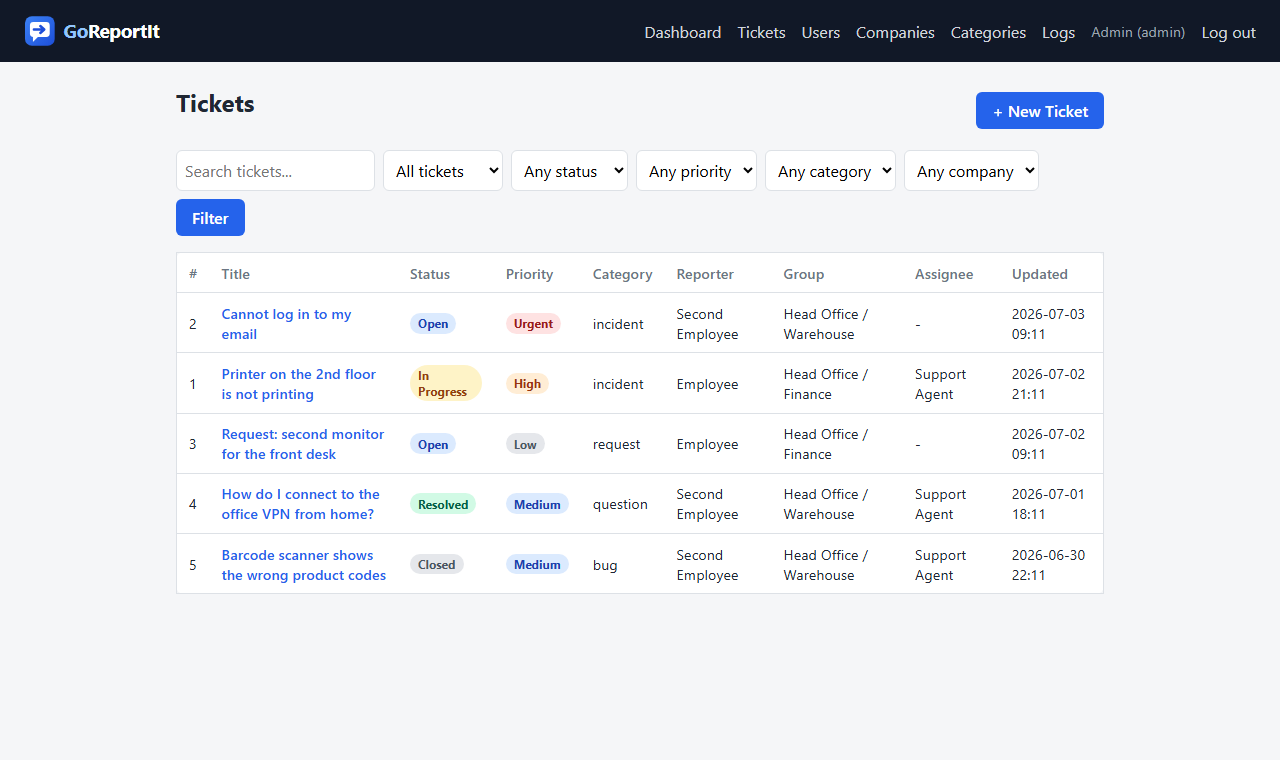
Every issue lands in a single queue with status, priority and category - filter by what matters and get to work.
๐ข Built for organizations
Model your world as companies and groups. Reporters see their own tickets; your team sees everything.
๐ฅ Clear ownership
Assign every ticket to an agent. "My tickets" and "unassigned" views mean nothing slips through.
๐ฌ Conversations, not email chains
Discuss each issue right on the ticket - with internal notes your reporters never see.
๐ฆ Priorities that pop
Low to urgent, color-coded at a glance, so the fire gets fought before the paper cut.
๐ Accounts your admin controls
No open signups. Your admin creates every account and decides who can report, and who can resolve.
How it works
- Set up - your admin creates companies, groups and user accounts.
- Report - anyone logs in and files an issue in seconds.
- Resolve - agents triage, assign, discuss and close.
Who sees what
Access is role-based and deliberately simple: your role decides what you can do, and what you can see follows from it.
๐ Reporters
See only the tickets they raised, in their own portal. They never see the team queue, other people's tickets, or internal staff notes.
๐ ๏ธ Agents
Work the shared queue and see every ticket, across all companies and groups. Give an agent categories and their view narrows to just those tickets, plus anything they raised or that is assigned to them.
๐ก๏ธ Admins
See everything, always. They also run the system: accounts and roles, companies and groups, categories, and the permanent deletion log.
Groups describe where reporters belong; they organize, filter and feed the stats, but they never limit what staff can see. Categories are the one lever that narrows an agent's view.
A closer look
Three roles keep things simple: reporters raise and follow their own tickets, agents work the queue, and admins manage accounts and settings. Here is what each of them sees.
Report an issue in seconds
Give the issue a title, describe what happened, and say how urgent it feels. Pick a category so it reaches the right people, and attach screenshots, photos or log files if they help tell the story. That is all it takes; the ticket is in the queue the moment you press the button.
Follow your tickets without chasing anyone
Everyone gets a personal "My tickets" page showing everything they have raised, with status and priority color-coded at a glance. See who is working on your issue, read replies, and search back through older tickets. When the status changes or someone replies, an email lands in your inbox automatically.
One queue for the whole team
Support staff work from a single queue holding every ticket. Filter by status, priority, category or company, jump straight to "my tickets" or "unassigned", or search by keyword. Color-coded badges make the urgent work impossible to miss, and new high-priority tickets also trigger an immediate email alert to the team.
Work the ticket, together
Everything about an issue lives on one page: the conversation with the reporter, attachments, and one-click updates to status, priority, category and assignee. Internal notes stay between staff; the reporter never sees them. A full history records every change, who made it, and when.
Know where you stand
The dashboard gives staff a live overview: open and resolved counts, active tickets by priority, volume by category, and which parts of the organization report the most. Unassigned work is called out so nothing slips through the cracks, and a daily morning brief email summarizes the last 24 hours.
Administration without the manual
Admins run everything from a few simple pages: create accounts and set roles (there are no open signups), organize people into companies and groups, and shape the ticket categories around your business. Agents can be focused on specific categories, so their queue and alerts only show what is relevant to them. Every ticket deletion is recorded in a permanent log.
Contact us
Questions, feedback or a demo request? Send us a message and we will get back to you.